- info@seqmatic.com
 Mon - Fri 9AM - 7PM PST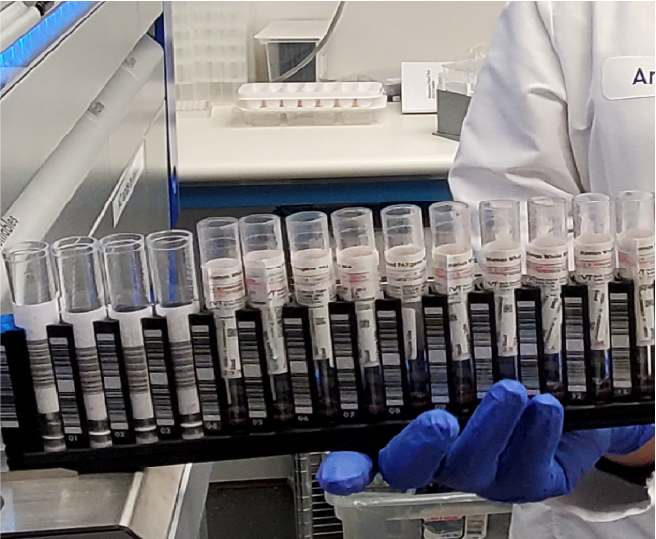

Learn more about our science-first approach!
WGS determines the complete DNA sequence of an organism, coding and non-coding regions alike, enabling discovery of genetic variation, structural changes, and novel genomic features that targeted methods would miss entirely..
WGS is the strongest option when the research question is not yet narrowed to specific genes or regions: population genetics studies, new reference genome generation, structural variant discovery, or any project where comprehensive genomic coverage matters more than sequencing depth at any single locus.
Chromosome conformation capture, commonly known as Hi-C, measures which regions of DNA are in physical proximity to each other inside the cell, capturing the three-dimensional organization of the genome. This contact data is used to order and orient sequence fragments into chromosome length scaffolds, substantially improving genome assembly quality. SeqMatic offers Hi-C library preparation through Dovetail Genomics and Phase Genomics kits.
This is the strongest option for scaffolding a new genome assembly into chromosome length sequences, resolving repetitive regions that short read or long read sequencing alone cannot correctly order, or studying three-dimensional genome architecture and chromatin interactions directly.
WES focuses sequencing on the protein coding regions of the genome, roughly 1 to 2% of total DNA, but the region responsible for the majority of known disease associated variants.
WES is the strongest option when the research question centers on coding region variants: clinical variant discovery, rare disease research, or projects where whole genome depth is not necessary to answer the question.
Amplicon sequencing targets specific genomic regions or engineered constructs directly, rather than sequencing an entire genome or exome.
This is the strongest option for validating genetic modification of any project where the region of interest is already known and genome wide coverage would be unnecessary overhead.
Metagenomic sequencing provides a comprehensive view of microbial communities directly from environmental, clinical, or biological samples without the need to isolate or culture individual organisms. SeqMatic offers shotgun metagenomic as well as 16S, 18S, and ITS sequencing to support microbial community profiling and taxonomic analysis. Shotgun sequencing captures DNA from the broad range of microorganisms present in a sample, including bacteria, fungi, and viruses, providing the most comprehensive view of community composition and functional potential. In contrast, 16S, 18S, and ITS sequencing focus on specific genetic markers to identify and characterize bacterial, eukaryotic, and fungal communities, respectively, enabling targeted taxonomic classification and phylogenetic analysis.
Metagenomics is the strongest option for microbial identification, community composition studies, and any project where the organisms present are not known in advance or cannot be cultured using traditional methods. It also supports de novo characterization of novel or emerging organisms directly from complex samples, and comparison of community composition across many samples at once.
Standard sequencing workflows and reference genomes are built around a handful of commonly studied model organisms. Non-model organism sequencing extends the same NGS methods to species without existing references: agricultural crops, livestock, wildlife, and other understudied lifeforms.
This is used for biodiversity research, agricultural breeding programs or evolutionary studies where no existing reference genome is available and custom bioinformatics is often required.
Viral genome sequencing determines the genetic sequence of viruses directly from clinical, environmental, or laboratory samples, supporting analysis of mutation patterns, strain relationships, and evolution over time.
This is used for outbreak tracking, viral strain identification, and studies of viral evolution, where mutation level resolution is needed and no single reference sequence fully captures the population being studied.
| Sample Type | Recommended | Minimum |
|---|---|---|
| Blood | 20µL+ at 20ng/µL | 10µL at 10ng/µL |
| Blood cards | 20µL+ at 20ng/µL | 10 ng/µL 10µL at 10ng/µL |
| Saliva | 20µL+ at 20ng/µL | 10µL at 10ng/µL |
| Stool | 20µL+ at 20ng/µL | 10µL at 10ng/µL |
| Environmental Samples | 20µL+ at 20ng/µL | 10µL at 10ng/µL |
| Cell free DNA | 250 pg–200ng | |
| FPPE tissue | 250pg – 200ng | |
| Ultra-low input DNA | 1 – 1000 cells | 250 – 1000 cells or 1 ng |
| Application | Recommended Depth |
|---|---|
| Low Pass Sequencing (CNV, population scale studies) | 0.1x to 4x coverage |
| Germline variant detection | 30 to 50x coverage |
| Somatic / tumor versus normal analysis | 100x or higher (tumor), 30 to 40x (normal) |
| Population genetics studies | 20 to 50x coverage |
| De novo genome assembly | 50x to 100x |
| Exome variant detection | 50 to 100x mean coverage |
| Amplicon Sequencing | 50,000 to 100,000+ reads per sample |
Step 1. Project consultation and planning – Your science shouldn’t have to fit our workflow. The SeqMatic workflow should fit your scientific question. SeqMatic’s scientific team reviews study objectives, sample types, and target sequencing depth before work begins, with assurance of confidential sample submission and handling throughout.
Project Planning & Consultation services →
Step 2. Sample submission and extraction – SeqMatic accepts a wide range of sample types and performs nucleic acid extraction in house, with viability and quality checkpoints before any library preparation begins.
Step 3. Library preparation – Libraries are constructed directly from genomic DNA through fragmentation and adapter ligation, validated through quality control at multiple points before committing to a full sequencing run.
Step 4. Sequencing – Libraries are sequenced on the platform best matched to the project’s read length and depth requirements.
Multiomics Technology Sequencing Platforms →
Step 5. Data analysis and delivery – Custom bioinformatics turns raw sequencing data into an interpretable result set.
Bioinformatics services →

Choose WGS if you need comprehensive genomic coverage or do not yet know which regions matter: population genetics, new genome assembly, or structural variant discovery. Choose WES if your research question centers on protein coding, disease associated variants and you want to reduce cost and turnaround versus full genome coverage. Choose amplicon sequencing if you already know the exact region or construct you need validated. Choose metagenomics if you are characterizing a microbial community rather than a single organism. SeqMatic’s team helps confirm the right method during project consultation.
Recommended coverage depends on the application. General starting points: germline variant detection typically uses 30 to 50x coverage, somatic or tumor versus normal comparisons often require 60x to 100x or higher, population studies typically use 20 to 50x, and de novo genome assembly typically requires 100x or more on short read platforms, or 50 to 100x on long read platforms. SeqMatic’s team helps determine the right depth for your specific research question during project consultation. For detailed specifications, see the table under “Recommended Sequencing depth”.
Yes, SeqMatic provides custom bioinformatics at three tiers — Primary (alignment and quantification), Secondary (QC, normalization, and differential expression), and Tertiary (pathway, gene ontology, and functional interpretation) and can go deeper per customer request, including support for non-model organisms.
SeqMatic’s quality control process is designed to catch problems before they affect a full sequencing run. Samples are evaluated at an interim QC checkpoint after extraction, and again with a MiSeq test run to validate pool performance before committing to a full run, so issues are identified and addressed early rather than discovered after sequencing is complete.
Standard DNA sequencing projects at SeqMatic are completed in 3 to 6 weeks from sample receipt to data delivery. This includes sample QC, library preparation, sequencing, and primary data analysis. Expedited turnaround is available in as few as 2 weeks for time sensitive projects. Actual turnaround depends on sample quality, target cell number, sequencing depth, and the scope of bioinformatics analysis requested.
Yes. CLIA/CAP accredited. All DNA projects are processed under CLIA quality standards that maintain consistency and reproducibility across NGS workflows.
The cost of a DNA sequencing project depends on several factors, and SeqMatic provides customized quotes based on each study’s requirements. The primary variables that affect pricing are the sequencing method (WGS, WES, amplicon, or metagenomics), sample number and input quality, sequencing depth, platform selection, and the scope of bioinformatics requested. SeqMatic’s scientists work with customers during project consultation to design an experiment that balances scientific goals with budget.

The SeqMatic approach starts with proven genomic workflows and proprietary controls that have been refined and optimized over the past decade to deliver considerably more data than Illumina specifications.
The SeqMatic approach starts with proven genomic workflows and proprietary controls that have been refined and optimized over the past decade to deliver considerably more data than Illumina specifications.
View More
We learn about the goals of our customer’s scientific research and the type of sequencing data that would be most beneficial to their project.
We learn about the goals of our customer’s scientific research and the type of sequencing data that would be most beneficial to their project.
View More
Then we modify our workflow to target those specific reads. Couple that effort with world class turnaround time.
Then we modify our workflow to target those specific reads. Couple that effort with world class turnaround time.
View More
This application of best science, higher quality data, more read depth per lane, and fast delivery makes SeqMatic an exceptional partner and value per research dollar spent.
This application of best science, higher quality data, more read depth per lane, and fast delivery makes SeqMatic an exceptional partner and value per research dollar spent.
View MoreOptimal solutions are custom-made according to research needs


